Patio Covers in Prescott, Arizona
Three permitting authorities, an elevation range from 2,083 feet to over 5,300, and a snow load nobody publishes as a single number. This is the reference for building a roof outdoors in Yavapai County.
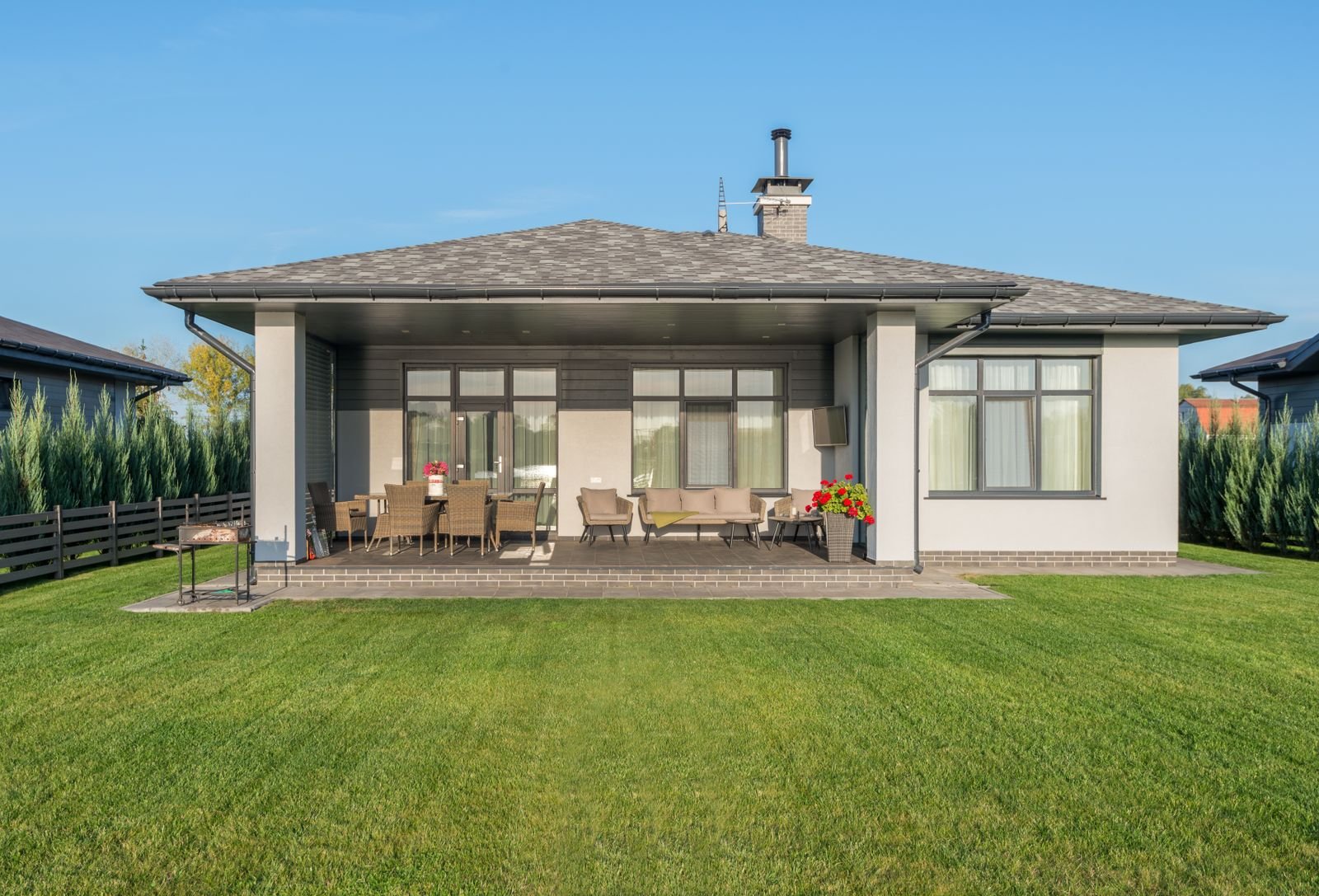 Attached patio cover
Which side of the city line you are on changes everything.
Not the material. Not the brand. The jurisdiction.
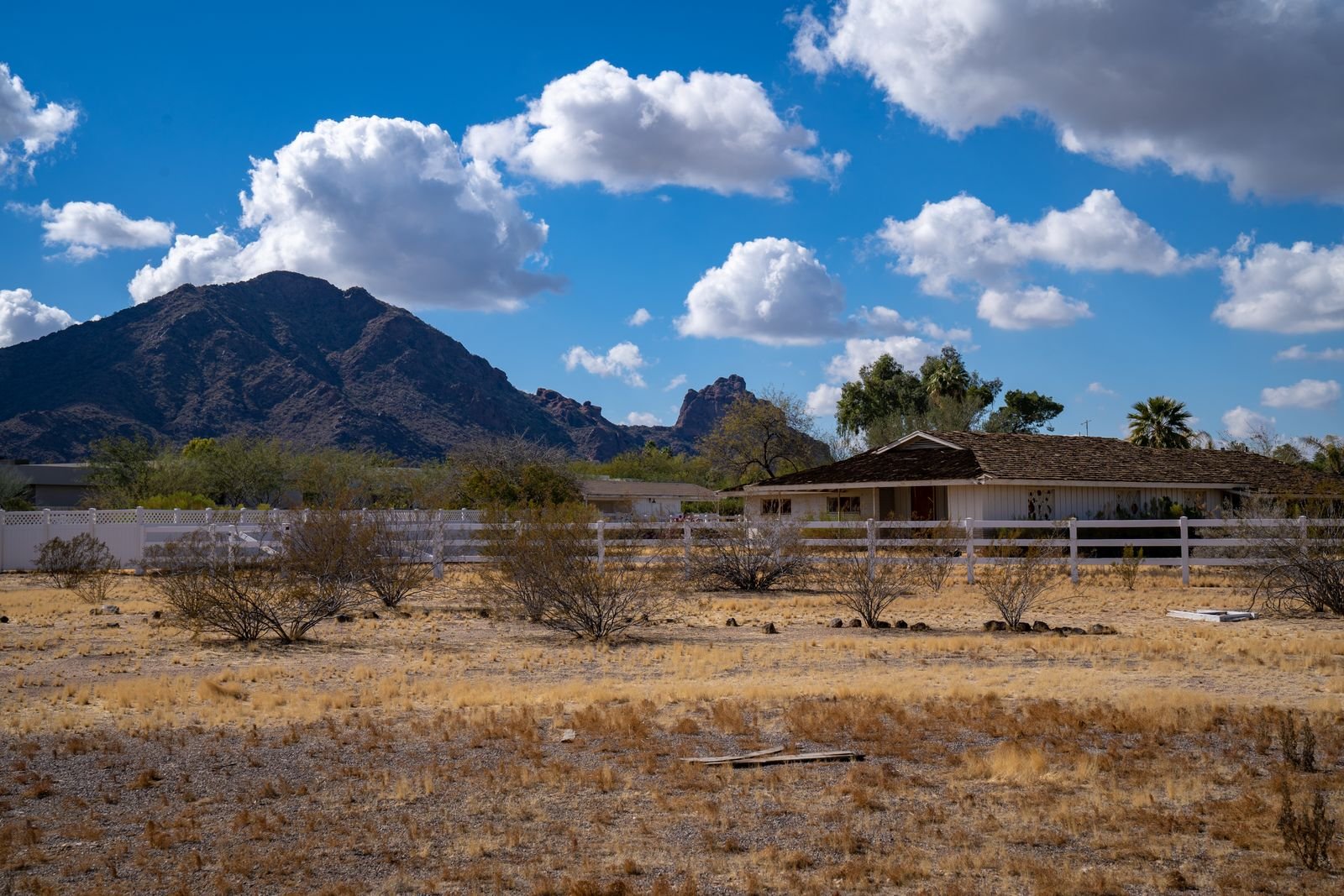 Open country outside the city
In the City of Prescott, the published list of work requiring a residential building permit answers Yes to a covered patio, Yes to a deck of any size, Yes to a carport of any size and Yes to a shed of any size. There is exactly one No on it: a window awning of 54 inches or less that is self-supporting.
Drive out of the city limits into unincorporated Yavapai County and the same shed becomes exempt up to 400 square feet and 12 feet. So does a detached carport. So does a ramada, an animal shade or a barn. That is Yavapai County Ordinance 2025-4, adopted 1 October 2025 amending section R105.2 of the 2024 International Residential Code.
Twelve of the twenty communities on this site are unincorporated. Eight run their own building departments and set their own thresholds. Getting this wrong is the most expensive mistake available here, and it is free to get right.
What needs a permit, side by side
The two published sources, in one table. Green means no building permit is required for that item in that jurisdiction.
| What you are building | City of Prescott | Unincorporated Yavapai County |
|---|---|---|
| Covered or screened patio or deck Covering a deck removes the county's uncovered-deck exemption. | Yes | Yes, once it is covered |
| Deck over 200 sq ft, over 30 in, part of egress, or attached Both jurisdictions treat this the same way. | Yes | Yes |
| Uncovered deck under 200 sq ft and under 30 in, detached, not egress This is the clearest split on the table: the City permits it, the county exempts it. | Yes | No |
| Detached carport The county exemption also covers ramadas, animal shades, barns and sheds. | Yes, at any size | No, up to 400 sq ft and 12 ft |
| Detached shed with no mechanical, plumbing or electrical The City sheet answers Yes for sheds both over and under 200 sq ft. | Yes | No, up to 400 sq ft and 12 ft |
| Window awning 54 in or less, self-supporting The only residential No in the City's whole table. The county adds two conditions: non-motorised, and no additional support. | No | No |
| Window awning greater than 54 in Same threshold in both jurisdictions. | Yes | Yes |
City column from the City of Prescott’s published “What type of work requires a permit?” sheet, residential building permit column. County column from Yavapai County Ordinance 2025-4, adopted 1 October 2025, amending IRC section R105.2. The eight incorporated towns each set their own thresholds, so check the community page for your address. Neither exemption touches zoning setbacks, HOA review, or the requirement that whoever builds it holds an Arizona ROC licence.
What actually goes over the patio
Ordered the way people usually shortlist them. A ramada and a pergola are not the same thing, and the difference decides whether you get shade or a pattern.
Patio Covers
Most patio cover quotes here skip the two questions plan check actually asks.
$30 to $55 per sq ft →02Ramadas & Shade Structures
The county exemption is real, specific, and narrower than people assume.
$45 to $95 per sq ft →03Pergolas
Slat spacing decides whether you bought shade or a pattern on the flagstone.
$28 to $65 per sq ft →04Awnings
Fifty-four inches is the line, and two other conditions come with it.
$22 to $48 per sq ft of coverage →05Patio Enclosures
The moment it is conditioned, it stops being a patio cover and starts being an addition.
$70 to $140 per sq ft →06Concrete Patios
Most slab advice online is written for places with one frost depth. This county has three.
$12 to $26 per sq ft →07Decks
A deck is an attachment in the 0 to 5 foot ignition zone, and the whole city is in the interface area.
$38 to $80 per sq ft →08Outdoor Kitchens
A water line in an outdoor counter at 5,300 feet is a winter problem waiting to happen.
$220 to $750 per linear ft of counter run →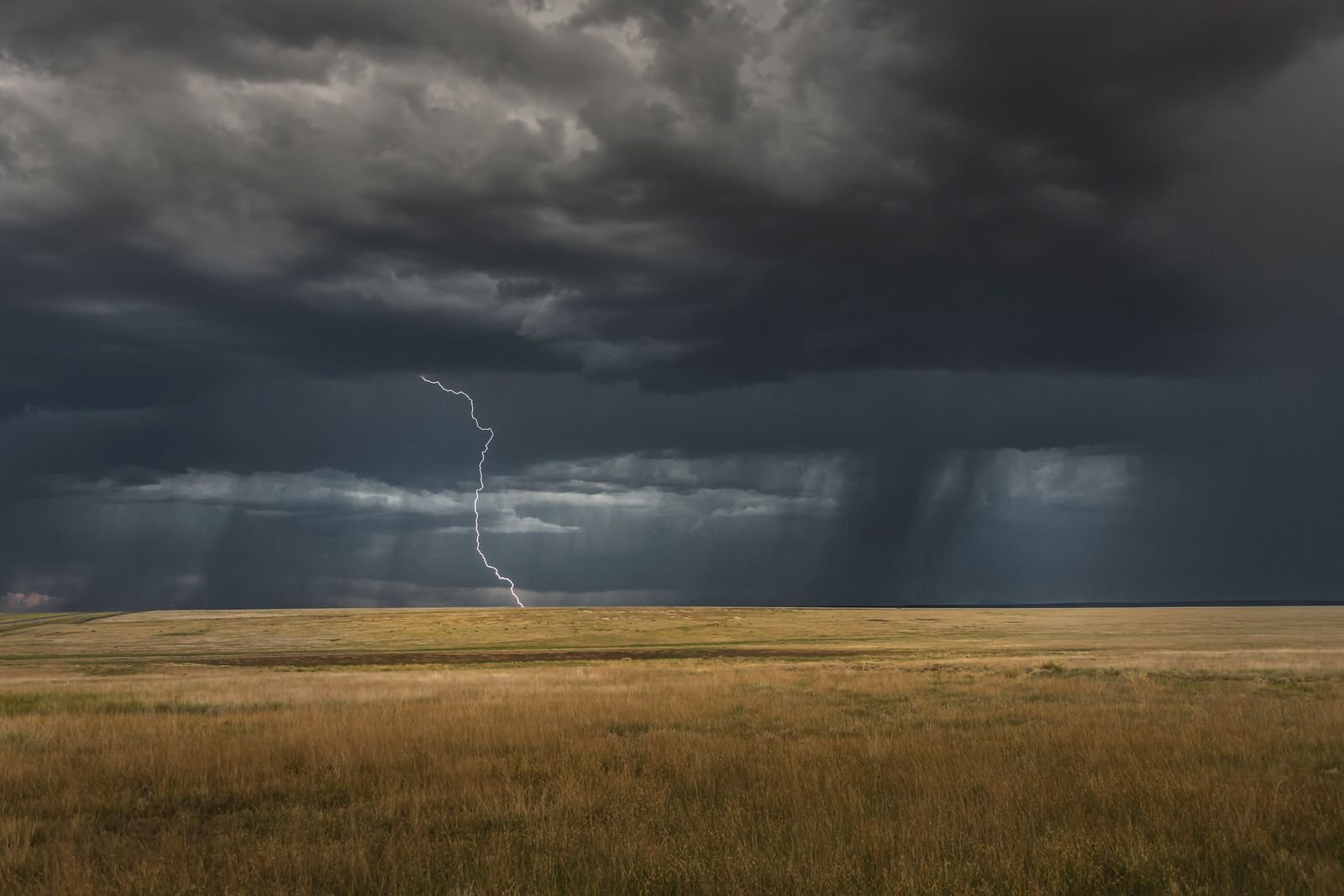 Rain shaft under a storm cell
The load case nobody quotes for
The National Weather Service runs the monsoon season from 15 June to 30 September. Wind events peak in July and August between 3pm and 9pm, with the maximum at 7pm. What arrives is not steady wind but a downdraft, and the two kinds behave differently: a wet microburst driven by precipitation drag, and a dry microburst where the rain evaporates on the way down, cools, accelerates, and hits the ground with very little rainfall to show for it.
The design number for both the City and the county is 105 mph 3-second gust at Exposure C. The tail of the distribution looks different: the highest thunderstorm wind ever measured in Arizona was 175 knots at Spring Valley in Yavapai County on 6 September 1996, recorded in NOAA Technical Memorandum NWS WR-282.
- Prescott Valley designs to a rainfall intensity of 4 inches per hour. That is a drainage number, not a trivia number.
- Retractable awnings come in. Anything left out in a downdraft is a sail.
- Free-standing structures take the full load. There is no wall helping them.
Installed planning ranges
The same numbers the calculators on this site use, published here rather than hidden behind a form.
| Structure | Installed range | Unit | Typical |
|---|---|---|---|
| Concrete patio | $12 - $26 | per sq ft | $18 |
| Awning | $22 - $48 | per sq ft of coverage | $34 |
| Pergola | $28 - $65 | per sq ft | $44 |
| Attached patio cover | $30 - $55 | per sq ft | $42 |
| Deck | $38 - $80 | per sq ft | $57 |
| Ramada or free-standing shade structure | $45 - $95 | per sq ft | $68 |
| Patio enclosure or sunroom | $70 - $140 | per sq ft | $104 |
| Outdoor kitchen | $220 - $750 | per linear ft of counter run | $460 |
Planning ranges for the Prescott and Yavapai County market, not quotes. They cover the structure as installed and exclude the permit, which is set by whichever authority has jurisdiction and is not published as a figure on this site.
The whole city is in the interface area
Under Prescott City Code Chapter 6-2 the City adopted the 2024 International Wildland-Urban Interface Code, adopted by Resolution 2026-1983. Section 302.1 is unambiguous: the wildland-urban interface areas shall be inclusive to the entire established geographical city limits of the City of Prescott. There is no map of some neighbourhoods being in and others out.
What varies parcel to parcel is the fire hazard classification, which sets which construction class applies. And the defensible-space zones are measured from the structure: 0 to 5 feet is the immediate zone, and the code names decks, stairs and attachments in it explicitly.
For a patio cover that is decisive. It is an attachment in the immediate zone and its roof is a roof, so the fire-rated assembly and protected-eave rules reach it.
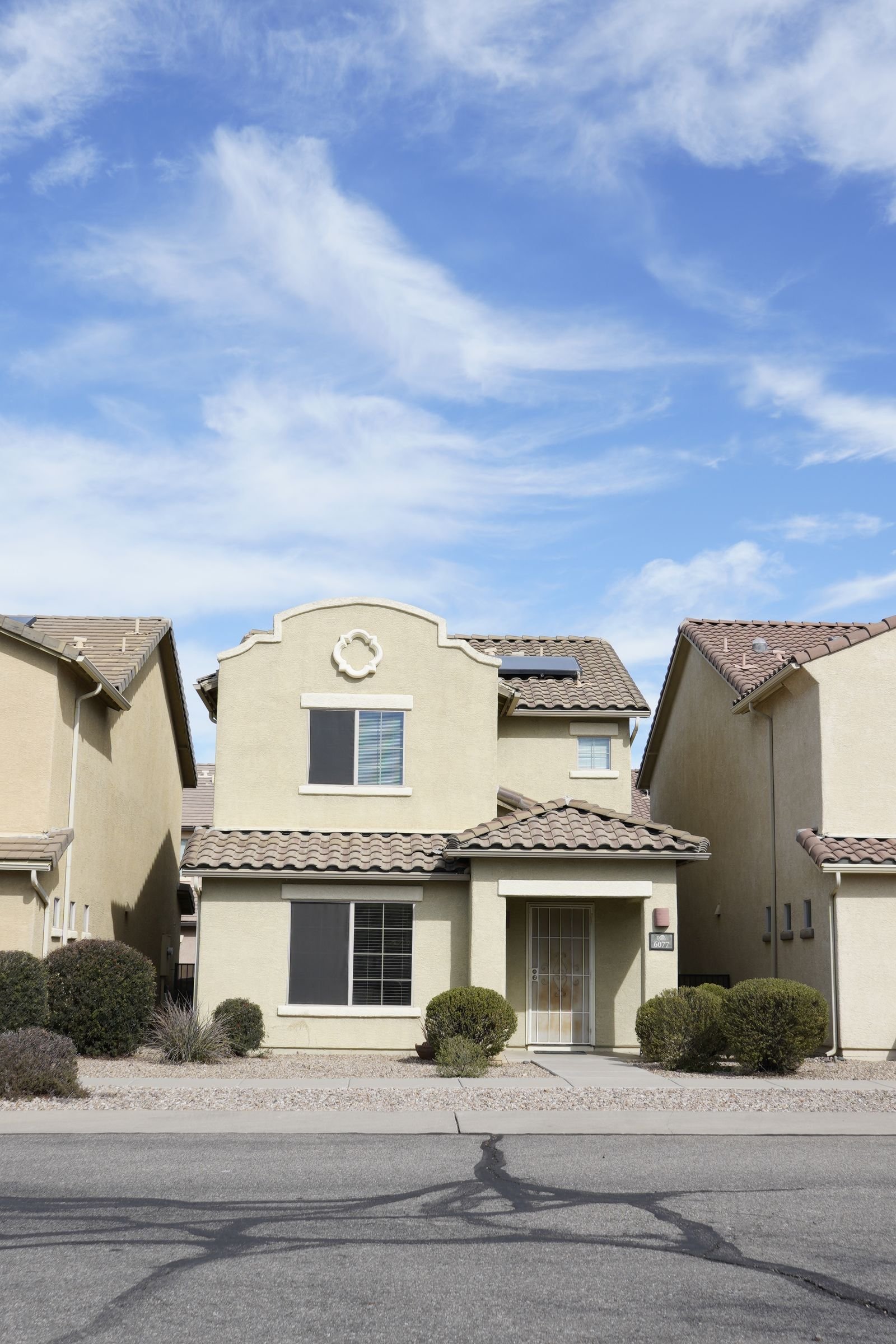 Tile-roofed house in the Southwest
Two thresholds inside the interface chapter are worth knowing separately from the ordinary permit rules: exterior alterations affecting less than 25 percent of surface area are exempt from compliance, and decks, patios and attachments are exempt from wildland-urban interface permit requirements if they do not increase the footprint by more than 500 square feet, though the vegetation requirements still apply.
Twenty communities, three kinds of authority
From Black Canyon City at 2,083 feet to Williamson Valley at 5,053. Frost depth alone steps from 12 inches to 24 across that range, and the same county office permits the whole span.
Start with the permit question
Everything else on this site assumes you know which authority decides and what it exempts. That answer is free and it takes one phone call.
Patio covers in Prescott and Yavapai County
Do I need a permit for a patio cover in Prescott?
Yes. The City's published sheet answers Yes in the residential building permit column for covered and screened patios and decks, with no square-footage exemption. Confirm your address with City of Prescott Building Division at 201 N Montezuma Street, Prescott AZ 86301, on 928-777-1371, open Monday to Friday, 8am to 5pm.
Is it different in unincorporated Yavapai County?
Substantially. Under Yavapai County Ordinance 2025-4, adopted 1 October 2025, unincorporated Yavapai County exempts one-storey non-habitable detached accessory buildings used as sheds, garages, carports, playhouses, animal shades and barns up to 400 square feet, with a height limit of 12 feet to mean roof height. A ramada can read onto that list. A covered patio attached to the house does not.
What snow load should my patio cover be designed to?
It depends where you are, and no single number covers the county. The City of Prescott says the value varies by site, and the City requires a report from the ASCE Hazard Tool. Unincorporated Yavapai County publishes a range of 20 to 70 psf. Prescott Valley publishes a flat 30 psf, non-reducible. Ask whoever quotes you which figure they used and where it came from.
What is the 54-inch rule?
It is the one clean exemption in this subject. The City exempts residential awnings of 54 inches or less that are self-supporting. Unincorporated Yavapai County exempts non-motorised window awnings that do not project more than 54 inches and do not require additional support. Same number, and the county adds two conditions worth reading twice.
Does an HOA need to approve it as well?
Very often, and in this market that is not a formality. Arizona law gives homeowners some protection on specific items, but architectural review of an outdoor structure is generally within an association's power. The HOA page sets out how the approval usually runs and what to have ready.
Do I need a licensed contractor?
For work of any consequence, yes. Arizona licensing is administered by the Registrar of Contractors and a licence can be checked free on the ROC website before any money changes hands. This site is a guide and is not itself a contractor.